Proven Toilet Training Tips for Children with Autism | Autizum
Learn effective toilet training tips for children with autism using ABA-based methods from Autizum. Discover signs of readiness, sensory-friendly strategies, communication tools, reinforcement systems, and step-by-step routines for toileting success.
Proven Toilet Training Tips for Children with Autism | Autizum
Toilet training is an important stage for all children however for those with autism this can pose particular issues. Communication barriers, sensory sensitivities and problems dealing with changes in routines could all delay the process -however, it's not impossible.
With a little patience, structure and the right techniques family members can help make toilet training an enjoyable and rewarding experience. we have ABA experts have helped thousands of children become independent in their toilets by using evidence-based, proven methods that are tailored to the needs of their children How to create a For more information, visit our explore Parent Training.
In this article we'll provide toilet training autism strategies that actually workStep-by-step strategies that will aid your child in learning this vital life skill with confidence and easily.
The Reasons Toilet Training isn't easy for children with Autism
Each child with autism is unique, however many factors can make the process of toilet training harder: Start building better routines todayHow to create a reliable reinforcement system for home use
- Communication issues Children might not know how to let you know when they have to go to the bathroom or what is expected in the bathroom.
- The sense of touch The sounds of flushing, the flashing lights or even the sensation of toilet seats could create discomfort.
- The difficulty with transitions Moving from the bathroom to playtime can cause disruption to routines and stress.
- Insufficient body awareness Some children might be unable to discern the physical signals that signal the need to defecate or urinate.
- Fear and anxiety Anxiety and fear - Experiences from the past or the unfamiliar surroundings can make toileting a daunting experience.
We at Autizum we focus on customized toilet training programsas there's no one-size-fits-all in terms of training.
The Signs That Your Child Might be Ready to Toilet Training
Before beginning, you should be sure to look for indicators that indicate your child is developing and behaviorally prepared. These are the most common indicators:
- Dry for about up to a couple of hours.
- Displays awareness of being soaked or dirty.
- Shows interest in the toilet, or about others who use it.
- Follows the basic guidelines (e.g., Sit down, Flush)
- You can pull your pants up and down with little assistance
- Demonstrates predictable bowel movements
If a few of these apply the child might be ready to start. If not, you can continue to build the foundational skills with play as well as modeling and basic routines.
Toilet Tips for Autism Training: Step-by-Step Method
The following tips for toilet training autism originate from ABA-based techniques that have that have been proven to aid children with autism gain toileting independence.
First Step: Create a Predictable Routine
Autism-related children thrive with regularity. Make a bathroom schedule that is consistent with their normal habits.
Begin by making sure your child goes to the bathroom:
- Every 30 to 45 minutes during the daytime
- Before bed and after meals
- When they exhibit signs of needing to get out (fidgeting or holding the their crotch, or walking)
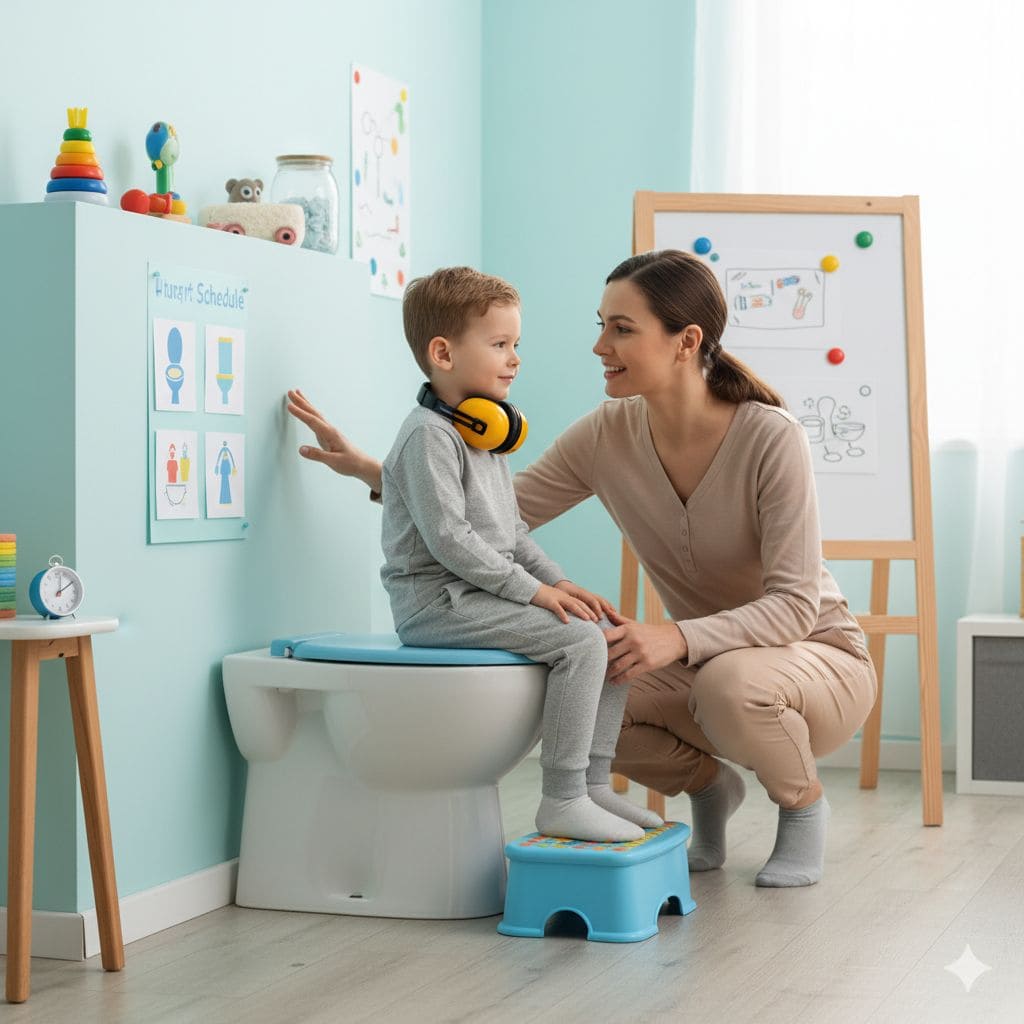
Make use of an visual calendar using icons or pictures to illustrate each step:
Here at Autizum our therapists employ visual prompts and boards to facilitate the process for those who are visually impaired or nonverbal.
2. Design a sensory-friendly bathroom environment
For many children who have autism, sensory issues can impede development.
Try these changes to the sensory system:
- Make use of gentle light instead of overhead bulbs.
- Create the cozy toilet as well as a step stool.
- Let your child explore the bathroom prior to beginning the training.
- Start gradually to reduce the sensitivities begin by laying down on the lid that is closed prior to going to the toilet.
If the sound of flushing is causing anxiety the child, make sure they go outside before flushing or using headphones to block out noise.
Step 3: Use Positive Reinforcement
Reinforcement is a cornerstone of ABA and is one of the most efficient toilet training autism strategies.
Give your child a reward immediately following each achievement even the smallest ones, like a toilet seat or telling you that they need to go.
Effective reinforcers might include:
- Applaud (Great job with your potty!)
- Tokens or stickers
- Access to a toy of your choice or video
- Hugs, high-fives, or high-fives
Here at Autizum we typically utilize token systems, where kids receive small prizes that eventually will eventually lead to a bigger reward (e.g. five stars = a particular event).
Step 4: Teach Communication
If your child has trouble learning in expressing the desire to leave then introduce messages by using signs, speech or even pictures.
Examples:
- Potty or Potty as well as Bathroom
- Then pointing to a picture of an empty toilet
- By using an AAC device or the PECS card
Learn these techniques in calm times so that your child is able to associate the positive results with them, and does not feel stress.
5. Practice and Model
Children learn best by imitation. Explain the bathroom routine clearly or make use of dolls, videos or even stories about social interaction that show you how to use the toilet step-by-step.
For example, develop the following social stories:
When I notice that my stomach overflowing, I head into the restroom. I lie at the sink. I utilize the toilet. I clean, flush then wash and scrub my hand. My family is proud of my achievements!
Autizum's ABA therapists frequently use customized social stories to aid children in visualizing every step, and lessen anxiety.
Step 6: Manage Accidents Calmly
Accidents are inevitable, particularly early in the process. It is important to remain in a calm and steady manner.
Do not scold or show anger. Instead, use words like:
Oops You were in a collision. We'll try again the next time.
Be gentle with your child during cleanup so that they are taught natural consequences, without feeling punished.
Step 7 7. Slowly fade support
As your child grows more congru:
- Make sure you have interval between bathroom visits.
- Fade triggers (verbal or visually).
- Change from external praise towards natural praise (You achieved it all on your own !).
The ultimate goal is independencetherefore, take your time and celebrate each step and then continue to reinforce as necessary.
Most Common Toilet Training Tips to Avoid
Even even with the best intentions, parents aren't immune to setbacks. Avoid these traps:
- Start when your child is at the age of
- Routines that are inconsistent
- The use of punishment or shame
- Dismissing the sensory sensitivity
- Comparing the progress of other children
Keep in mind that progress may be slow, and that's fine. ABA concentrates on consistent reinforcement, not on perfection.
How Autizum Supports Toilet Training Success
We use structured ABA-based programs that teach children to use toilets step-by-step. Our therapists design plans to meet the needs of each child's level of communication, their sensory profile, as well as the the environment of their families.
Our procedure includes:
- Functional Behavior Assessments (FBA) to determine barriers to toileting
- Training for parents to ensure home consistency
- Visual support, reinforcement systems and progress monitoring
- Collaboration with caregivers and teachers to ensure the sameness of
We've assisted many families in turning issues with toileting into independence for life by focusing on perseverance, optimism and expert guidance.
Conclusion
Toilet training can be overwhelming however, with routines that are structured as well as reinforcement and understanding that every child can be successful.
The most efficient Toilet training for autism strategies focus on patience positive attitude, predictability and patience. Be grateful for small wins, adjust to your child's needs and remember that progresshowever slow it may be is still an achievement.
We're there to help families through throughout the entire process and provide personalized ABA assistance that transforms everyday events into moments of joy.
Frequently Asked Questions
Get answers to common questions about our ABA therapy services.